TL;DR
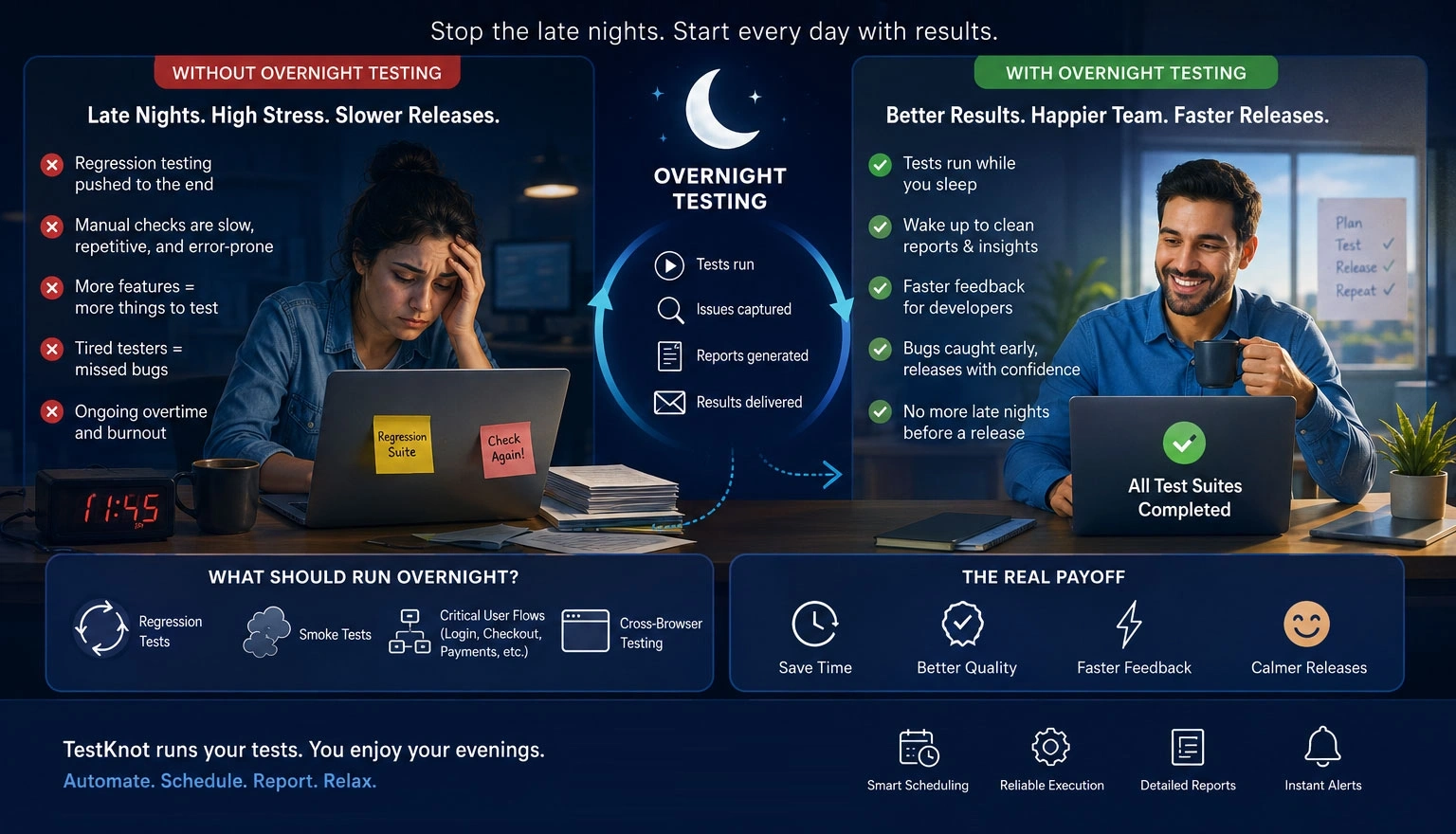
- QA teams work late because regression testing gets pushed to the end, right when release pressure is highest.
- As products grow, manual checks become slow, repetitive, and easier to mess up when people are tired.
- Overnight testing moves those repeatable checks off-hours, so teams start the day with results instead of another long test run.
- It does not replace testers; it gives them cleaner reports, faster feedback, and calmer release days.
If you’ve spent any time on a QA team, you probably know the drill. The developers finish their work late, the rest of the team is waiting for QA to give the green light, and there you sit, staring at another massive regression suite. You already know you’re not getting out on time.
Nobody plans it this way. It just sort of happens. Features always get priority, and testing always comes last. QA finally gets the build, but the due date is closing in fast.
And as the product grows, it gets even messier. More features mean more things to check. The old things still matters. Tests that used to take an hour now swallow half your day.
Why Regression Testing Actually Slows Everything Down
Regression testing is crucial, it ensures new features from breaking things that are already working. But the more the product grows, the more you have to test. Every sprint brings new features, every bug fix adds another box to tick.
A lot of teams still run these checks by hand: login, payments, settings, permissions, notifications you have to check it all before a release goes out. And because testing always comes at the end, the pressure builds up.
Working Overtime Doesn’t Just Ruin Your Evening, It Harms the Quality of Work Too
Here’s something people forget to mention: it’s not just the release that suffers. When you test for hours on end, your brain gets foggy. You start missing details. You speed through tests you know by heart, and that’s when mistakes slip through easily.
A late night here and there? That happens everywhere. But every single release? That’s a process problem, not just bad luck.
So What’s “Overnight Testing,” Anyway?
It’s just what it sounds like. Instead of running tests during the day, you schedule them after hours. The suite kicks off at 11 PM, churns through everything, and wraps up while you’re still at home.
This doesn’t replace testers. It just cuts the grunt work so the team can actually use their brains on results instead of clicking through the same steps for the hundredth time.
What Should Actually Run Overnight
Not every test needs to run while you sleep. Save the overnights for:
- Regression tests they take a very long time and don’t change much
- Smoke tests, to identify major problems that failed post-deployment
- Big user flows: signup, login, checkout, payments, password reset
- Cross-browser checks, since nobody loves testing those by hand
Basically, anything you want answers on as soon as you grab your coffee.
Why Some Teams Still Won’t Automate Overnight
Trust is huge. If your tests fail for silly reasons all the time, nobody believes the results. Maintenance is another hurdle a flaky suite just brings more headaches. There is concern that no one is paying attention when problems occur, but really, that is merely a reporting issue, not a reason to skip automation.
How Teams Actually Pull This Off
When teams get this right, they don’t just schedule everything and hope. They figure out the tests that matter most for the business, build solid coverage, and set those to run automatically. Then, they collect results and send out reports and notifications. No more staying late just to start the suite, the system handles it, and you roll in with answers already waiting.
But What If Something Fails at 2am?
Everyone asks this. The answer? Good reporting. Solid setups grab screenshots, logs, errors, browser info, everything, when something breaks. Some teams set up alerts in Slack or email so they know right away.
Without this, overnight testing is just a black box you’re guessing. With it, finding and fixing bugs takes minutes, not an afternoon.
The Real Payoff
What you really win is time. Instead of losing your whole morning to test runs, you walk in and just review results. Developers get feedback faster. Bugs get caught sooner. Releases stop feeling like a panicked fire drill.
If you’re shipping all the time weekly, daily those extra hours really add up.
Mistakes People Make Getting Started
- Running every test every night, instead of just the ones that matter
- Ignoring flaky tests instead of fixing them
- Setting up unread reports that nobody actually follows up on
- Blaming the app when test data is actually the issue
Final Thought
QA teams aren’t grinding late because the job’s tough. It’s the repetitive checking stacked right before a deadline that kills your schedule. Shift that to overnight, and release day gets a whole lot calmer. Less stress, fewer late nights, same quality.
Sooner or later, manual testing just can’t keep up with regular releases. That’s when overnight automation starts keeping your evenings free. Tools like Testknot handle all of it, scheduling, running suites, sending you clean reports by the time you’re at your desk. No more babysitting the test runs after dark.