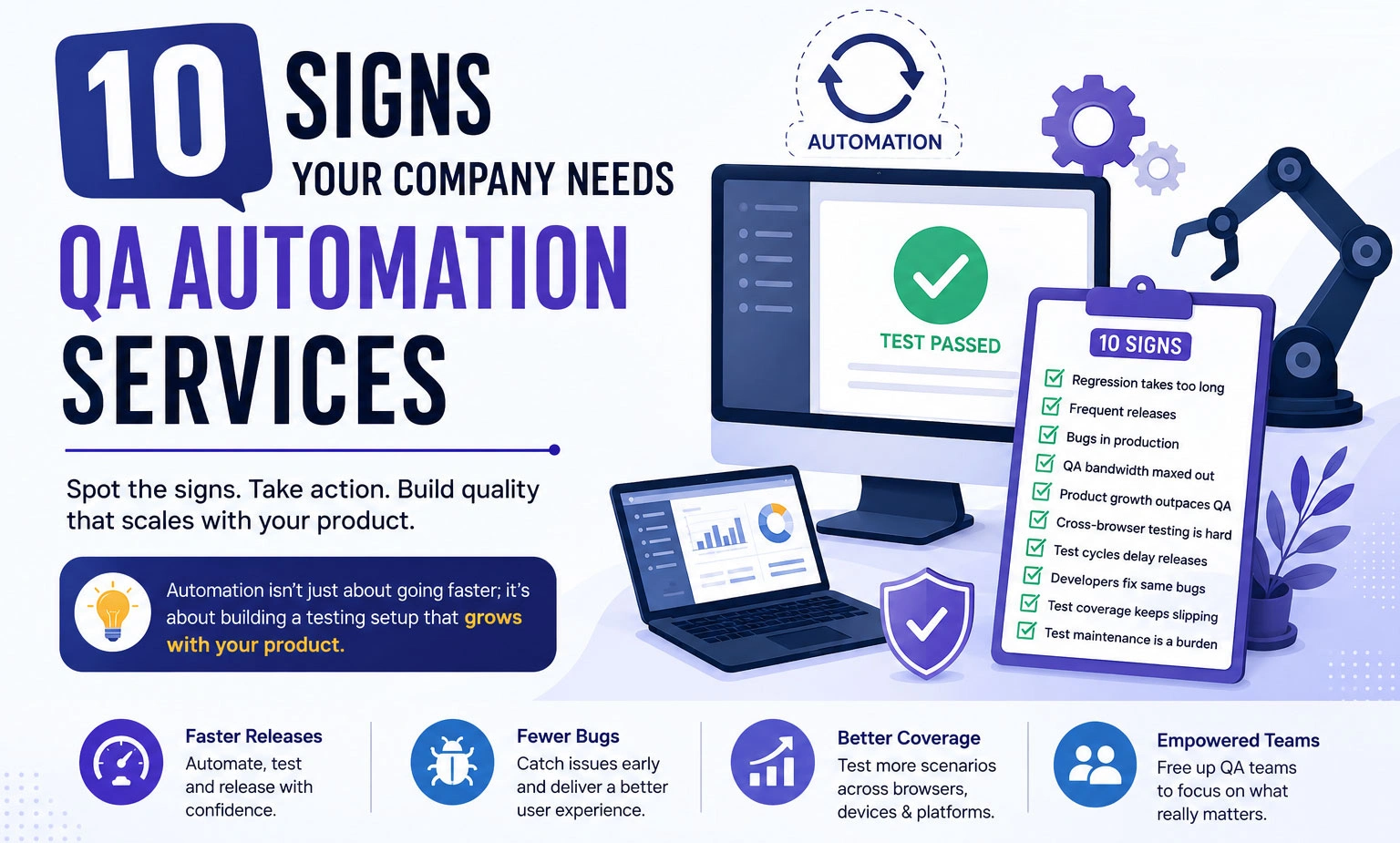
Your company probably needs QA automation services when manual testing starts slowing down releases, repeat bugs keep showing up, and your QA team spends more time checking the same flows than improving quality. Automation helps growing teams test faster, catch issues earlier, and keep coverage steady without burning everyone out. If testing feels like the thing holding your product back, that’s usually the sign to start taking automation seriously.
Most teams don’t just wake up and realize they need QA automation services out of the blue.
Usually, it sneaks up on you after months of feeling stuck. Releases take forever. Testing that used to be quick now drags on for days. Somehow, bugs still manage to sneak into production, even after marathon testing sessions. Developers feel stuck fixing the same issues, and QA teams struggle with the sheer pile of work on their desks.
Plenty of companies just throw more people at manual testing, thinking manpower is the answer. Honestly, the real issue often lies in how the testing is done.
Not every business needs QA automation. If you’ve got a small app and only release updates once in a blue moon, manual testing usually works just fine. But the story changes once your product gets bigger, your team expands, and release schedules start piling up. That’s when manual testing starts to show its cracks.
If you find yourself nodding along with a few of these signs, it’s probably time to take QA automation seriously.
1. Regression Testing Is Eating Up Too Much Time
Regression testing is usually where manual testing starts letting you down.
With every release, you have to double-check what already works, just to make sure nothing new broke it. Early on, this isn’t such a big deal. But as your feature list gets longer, so does your checklist, and suddenly, you’re stuck spending days repeating those same tests with every release.
When regression testing slows you down, automation steps in. It can run those hundreds of repeat tests for you, freeing up your team’s time for new features and creative testing.
2. You’re Shipping Updates All the Time
Most teams these days don’t wait months between releases.
Weekly, daily, even several times a day deployments are now the norm for many companies. At that pace, manual testing can’t keep up.
Faster shipping means less time to manually click through everything. Automation helps by letting you run tests every single time the code changes. Instead of manual testing holding things up, it becomes a seamless part of the workflow.
3. Users Keep Finding Bugs First
Finding a few bugs now and then is normal, but when customers start finding issues before QA does, it’s a red flag.
This usually happens when your coverage can’t keep up with new features. Manual testers only have so many hours in the day and can’t retest every path every cycle.
When bugs keep landing in production, automation helps by catching the basics and the big stuff every time, so the same problems stop falling through the cracks.
4. Manual Testing Is Eating Up All Your QA Bandwidth
QA teams often get tied down repeating the same tasks: logging in, filling forms, and running through basic flows again and again.
Is it necessary? Yes. Is it a waste of your best people’s talents? Also yes.
When these repeat checks swallow your team’s time, automation takes over and handles the grunt work. That way, skilled testers can focus on tricky bugs, usability, and working alongside developers.
5. Product Growth Outpaces Your QA Team
Every new feature means more to test.
As your product grows, new workflows multiply quickly. Before you know it, the manual testing effort just can’t keep up anymore.
Hiring extra testers only solves things for a moment, and usually, the product keeps getting bigger faster than your team does.
With automation, your coverage grows without adding the same amount of work. This is huge for businesses rapidly adding new features.
6. Cross-Browser Testing Feels Impossible
Not all users are on the same browser or device.
A feature that’s flawless in Chrome might break in Safari, Firefox, or Edge. Testing every scenario on every browser eats up hours.
Usually, teams just start dropping browser coverage because, honestly, there aren’t enough testers to go around.
Automated tests make cross-browser checks much easier. With one click, the same test runs everywhere, so you know users get the same experience, no matter how they access your app.
7. Test Cycles Hold Up Releases
Testing should help releases, not slow everything down.
If the whole team is always waiting around for QA to finish, your process needs help.
Long testing cycles put pressure on everyone, especially QA. Suddenly, they’re expected to do more in even less time. That’s a recipe for missed bugs and patchy coverage.
Automation tackles the repeat work and helps teams move faster so releases keep on schedule.
8. Developers Keep Fixing the Same Old Issues
Engineering teams hate running into déjà vu bugs.
It’s frustrating to fix the same problems with every release because something broke before anyone caught it. Developers end up wasting time tracking down things automation could’ve flagged right away.
Automated tests spot these issues earlier, so instead of scrambling post-release, teams can deal with problems while developing.
9. Test Coverage Keeps Slipping
When products get complicated, keeping everything tested is tough.
Some areas get lots of attention, others get missed because time’s tight or people are overloaded.
These gaps add up and don’t show themselves until something goes wrong for users.
Automation sets up repeatable tests for key workflows, so once it’s done, you know they’ll always get checked, release after release, with no extra manual labor.
10. Just Maintaining Tests Becomes a Full-Time Chore
Some companies dive into automation, but pick the wrong tools and make their lives harder.
It’s pretty common: teams get buried in script updates, fixing selectors, or managing frameworks every time the app changes. Suddenly, automation feels like just another job. A smart QA automation strategy actually cuts maintenance. Tools like Testknot make it easy for anyone, even manual testers, to build and run automated tests without writing tons of code. That way, automation boosts the whole team instead of piling up work for a handful of automation experts.
Bottom line: automation isn’t just about going faster; it’s about building a testing set-up that grows with your product.
What If You Ignore the Signs?
A lot of companies put off automation because manual testing still “sort of works.”
But testing problems sneak up gradually.
A missed bug here and there turns into regular customer complaints. Testing spills from one day to three. A tiny regression suite balloons into hundreds of tests. Suddenly, your release schedule is a mess.
By the time you realize testing’s out of control, you’ve usually got a mountain of debt in your QA process.
Getting started with automation sooner sets a solid foundation, so you’re ready before things get truly tangled.
Final Thoughts
QA automation isn’t just for tech giants.
It often helps growing teams the most, the ones who need to keep quality high even as their products and release cycles get more demanding.
If you’re constantly wrestling with long regression cycles, stubborn bugs in production, messy releases, patchy coverage, or ever-growing QA backlogs, it’s time to look at automation.
The best automation projects happen because teams need them, not just because everyone else is doing it. When testing starts slowing things down, shaking your confidence in releases, or eating up every last bit of team energy, it’s probably time to rethink your approach. That’s usually the point when tools like Testknot and professional QA automation services become not just useful, but essential.